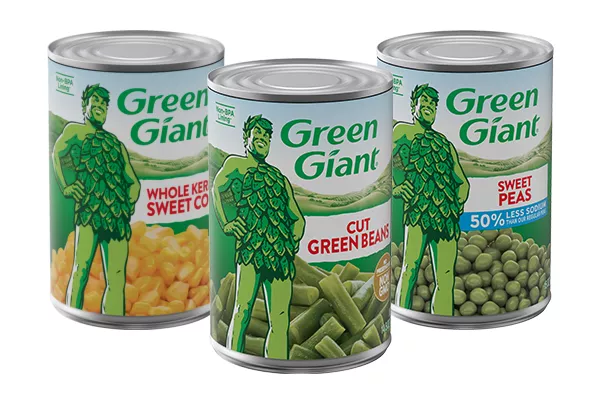
B&G Foods, Inc. has announced the completion of another significant step in its portfolio transformation strategy, confirming that it has divested the Green Giant U.S. frozen vegetable product line to Seneca Foods Corporation. The transaction marks the latest milestone in B&G Foods’ ongoing effort to streamline its operations, sharpen its strategic focus, and strengthen its balance sheet through targeted asset sales.
This latest move builds upon a series of previously announced divestitures involving the iconic Green Giant and related vegetable brands. In November 2023, B&G Foods sold the Green Giant U.S. shelf-stable vegetable product line to Seneca Foods, effectively transferring canned vegetable operations in the United States. More recently, in August 2025, B&G Foods completed the sale of the Le Sueur U.S. shelf-stable vegetable product line to McCall Farms. Additionally, in October 2025, the company entered into a definitive agreement to divest the Green Giant and Le Sueur frozen and shelf-stable vegetable product lines in Canada to Nortera Foods. That Canadian transaction is expected to close during the second quarter of 2026, subject to regulatory approval in Canada and customary closing conditions.
With the sale of the U.S. frozen vegetable business now finalized, B&G Foods has effectively transferred control of the majority of the Green Giant vegetable portfolio in the United States to Seneca Foods. The transaction is effective immediately and includes the frozen vegetable manufacturing facility located in Yuma, Arizona. By transferring this production asset along with the brand rights, the deal provides Seneca Foods with both manufacturing capacity and product line continuity.
Casey Keller, President and Chief Executive Officer of B&G Foods, described the sale as an important inflection point in the company’s broader restructuring initiative. He emphasized that the transaction aligns with B&G Foods’ long-term strategy of divesting non-core brands and product lines to improve operational focus and reduce long-term debt obligations. According to Keller, the divestiture strategy is designed to simplify the company’s portfolio and concentrate resources on higher-priority growth platforms.
Keller further noted that reuniting the Green Giant U.S. frozen vegetable business with the Green Giant U.S. shelf-stable vegetable business under a single owner represents a logical and beneficial next step for the brand. By consolidating the product lines with Seneca Foods—one of the largest fruit and vegetable processors in the United States—the Green Giant brand gains a unified operational structure. This consolidation is expected to enhance brand stewardship and create efficiencies in production, supply chain management, and distribution.
The Green Giant brand has long been a staple in American households, with a legacy spanning decades in frozen and canned vegetable categories. Under Seneca Foods’ ownership, the brand’s U.S. frozen and shelf-stable offerings will now operate within a vertically integrated vegetable processing organization with extensive agricultural sourcing, production, and packaging capabilities. This alignment may allow for greater synergy in crop procurement, manufacturing optimization, and retail channel support.
Despite the sale of the U.S. frozen operations in Yuma, Arizona, B&G Foods will maintain its frozen vegetable manufacturing operations in Irapuato, Mexico. As part of the transaction, B&G Foods has entered into a co-pack agreement with Seneca Foods. Under this arrangement, B&G Foods will continue to manufacture certain Green Giant frozen products on behalf of Seneca Foods. The co-pack agreement provides continuity in production while supporting a smooth transition of brand ownership.
This structure allows B&G Foods to retain a role in the frozen vegetable supply chain, albeit in a reduced capacity, while Seneca Foods integrates the newly acquired assets. Co-packing arrangements such as this are often utilized in food industry divestitures to ensure uninterrupted product availability and to leverage existing operational expertise.
Although the financial terms of the transaction were not disclosed, B&G Foods stated that proceeds from the sale will be allocated toward general corporate purposes. A significant portion is expected to be directed toward reducing long-term debt, which has been a central objective of the company’s asset monetization strategy. The company also indicated that funds may be used to acquire assets that align more closely with its core business segments, as well as to cover transaction-related taxes, fees, and expenses.
The divestiture reflects a deliberate effort by B&G Foods to reshape its portfolio and improve financial flexibility. Over recent years, the company has undertaken a comprehensive review of its brand holdings to identify assets that may not align with its evolving strategic priorities. By exiting selected vegetable product categories, B&G Foods is narrowing its operational scope and focusing on segments where it believes it can achieve stronger long-term growth and margin performance.
From a market perspective, the transaction also underscores a broader trend within the packaged food sector, where companies are reassessing brand portfolios in response to changing consumer preferences, cost pressures, and capital allocation priorities. Streamlining operations and divesting non-core assets can free up capital for innovation, marketing investment, and balance sheet strengthening.
For Seneca Foods, the acquisition represents a meaningful expansion of its branded vegetable portfolio. With both frozen and shelf-stable Green Giant U.S. product lines now under its control, Seneca Foods is positioned to manage the brand across multiple formats and distribution channels. This unified approach may offer strategic advantages in negotiations with retailers, promotional planning, and brand positioning.
The transaction was supported by leading financial institutions. Barclays Capital Inc. and Deutsche Bank Securities Inc. served as financial advisors to B&G Foods, providing strategic and financial guidance throughout the process. Their involvement highlights the complexity and scale of the transaction within the broader context of B&G Foods’ multi-year divestiture program.
As B&G Foods continues to execute its strategic transformation, investors and industry observers will likely monitor the company’s next steps in portfolio optimization and capital deployment. The pending Canadian divestiture to Nortera Foods remains an important component of the broader restructuring plan, with its anticipated closing in the second quarter of 2026 marking another key milestone.
In summary, the sale of the Green Giant U.S. frozen vegetable product line to Seneca Foods represents a significant chapter in B&G Foods’ ongoing portfolio realignment. By transferring manufacturing operations in Yuma, Arizona, entering into a co-pack agreement for continued production support, and applying proceeds toward debt reduction and strategic reinvestment, B&G Foods is advancing its stated objectives of focus, financial discipline, and long-term value creation. Meanwhile, Seneca Foods strengthens its position in the vegetable category by consolidating control of one of America’s most recognizable vegetable brands across frozen and shelf-stable formats.
Source Link:https://www.businesswire.com/