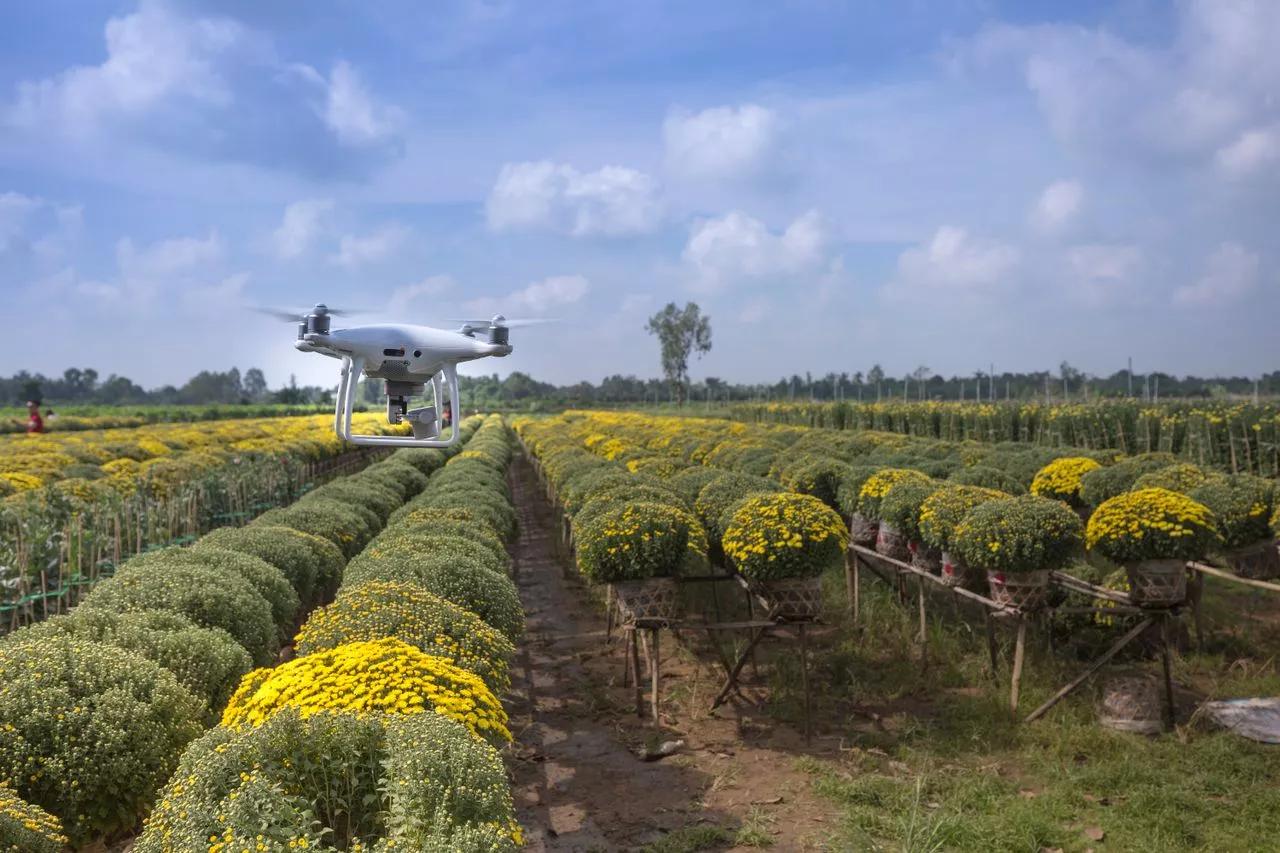
The LoRa Alliance®, the global non-profit organization responsible for developing and promoting the LoRaWAN® standard, has announced that LoRaWAN has firmly established itself as the leading connectivity technology for smart agriculture. From individual farms and livestock operations to large-scale national agricultural initiatives, the technology is increasingly being adopted to enable reliable, cost-effective, and scalable Internet of Things (IoT) connectivity across rural environments.
As agriculture becomes more data-driven, farmers are turning to connected technologies to improve productivity, reduce costs, optimize resource usage, and strengthen sustainability efforts. However, agricultural environments present unique connectivity challenges. Croplands often span vast areas beyond the reach of traditional communications infrastructure, while livestock frequently roam remote grazing regions without access to reliable cellular networks or electricity.
LoRaWAN addresses these challenges by delivering long-range, low-power wireless connectivity that functions efficiently across remote landscapes. Its ability to support thousands of sensors on a single network while maintaining minimal energy consumption has made it one of the fastest-growing low-power wide-area network (LPWAN) technologies worldwide.
According to the LoRa Alliance, agriculture remains one of the most difficult sectors to connect because operations extend well beyond areas served by conventional communication infrastructure. Traditional wireless technologies such as Wi-Fi, Bluetooth, and cellular networks often struggle to provide reliable coverage across expansive farms, forests, grazing lands, orchards, and plantations.
Alper Yegin, CEO of the LoRa Alliance, emphasized that LoRaWAN has become the preferred solution because it reaches locations where farming actually takes place.
He explained that the technology combines broad accessibility, extensive ecosystem support, and worldwide adoption, allowing farmers to connect isolated fields, mobile livestock, orchards, plantations, and entire agricultural estates without the expense and complexity associated with conventional networking technologies.
LoRaWAN has become recognized as one of the four major wireless IoT connectivity technologies alongside cellular, Wi-Fi, and Bluetooth. While each technology serves different purposes, LoRaWAN offers several distinct advantages that make it particularly well suited for agriculture.
One of the technology’s greatest strengths is its ability to provide communication across extensive agricultural landscapes.
A single LoRaWAN gateway can cover several kilometers or miles of farmland, allowing growers to connect sensors distributed throughout fields, orchards, vineyards, and grazing areas without deploying numerous communication towers.
This significantly lowers infrastructure costs while simplifying network management.
Agricultural sensors are often installed in locations without direct access to electricity.
LoRaWAN devices consume extremely little power, allowing many sensors to operate for several years using small batteries or compact solar panels. This dramatically reduces maintenance requirements and minimizes the need for frequent battery replacement.
Unlike cellular IoT solutions that require SIM cards and recurring subscription fees, LoRaWAN operates in license-free radio spectrum.
Farmers avoid monthly connectivity charges, expensive spectrum licensing, and per-device data plans, making deployments financially practical even across thousands of connected devices.
Because farms are frequently located in isolated rural regions, establishing reliable communications infrastructure can be difficult.
LoRaWAN enables growers, cooperatives, and agricultural organizations to deploy their own private wireless networks independently of existing telecommunications infrastructure, ensuring dependable connectivity even in remote areas.
For locations beyond the reach of terrestrial communications, satellite-enabled LoRaWAN extends coverage to extremely remote agricultural sites.
This capability enables continuous monitoring of crops, livestock, irrigation systems, and environmental conditions regardless of geographic isolation.

The LoRa Alliance reports that the technology benefits from one of the largest ecosystems in the LPWAN industry.
More than 650 certified LoRaWAN devices developed by over 334 Alliance member companies are currently available, providing farmers with a broad selection of sensors, gateways, controllers, and monitoring equipment suitable for diverse agricultural applications.
The technology’s worldwide deployment continues to expand rapidly.
By the end of 2025, more than 125 million devices had been connected through LoRaWAN networks globally, demonstrating increasing confidence across industries including agriculture, logistics, utilities, smart cities, and environmental monitoring.
The LoRa Alliance highlighted several projects from around the world demonstrating how LoRaWAN is delivering measurable benefits across different agricultural sectors.
One of the most significant agricultural deployments involves combating Black Sigatoka, one of the world’s most destructive banana diseases.
The Banalytics project, supported by Lacuna Space, combines satellite-connected LoRaWAN sensors with artificial intelligence to identify disease conditions before visible symptoms appear.
Sensors positioned across banana plantations continuously monitor temperature, humidity, and soil nutrients, while AI-powered image analysis detects early signs of infection.
Approximately ten monitored plants per hectare provide sufficient environmental data to represent much larger cultivation areas.
By identifying disease risks earlier, growers can reduce unnecessary fungicide applications, lower production costs, and protect crop yields while minimizing environmental impact.
Importantly, satellite-enabled LoRaWAN allows monitoring even in remote plantations lacking conventional communication infrastructure.
Livestock monitoring presents another major application for LoRaWAN.
Australian company MooField has developed lightweight solar-powered GPS ear tags weighing less than 30 grams that allow farmers to track cattle roaming across vast grazing properties.
The system uses LoRaWAN gateways powered by solar energy and equipped with remote management capabilities.
Because the gateways can be installed in areas without electricity, farmers receive continuous updates on herd locations without conducting time-consuming manual searches.
The company is also exploring satellite backhaul capabilities that would enable coverage across even larger grazing territories.
Malaysia’s durian industry has also embraced LoRaWAN technology.
At MIE Agro Farm, operators deployed more than twenty soil monitoring sensors supplied by Seeed Studio throughout an 80-hectare plantation containing approximately 6,000 durian trees.
Durian cultivation requires careful management of soil moisture, humidity, and temperature.
Previously, farm managers spent nearly two hours every day walking through the plantation to manually inspect growing conditions.
The LoRaWAN deployment now provides continuous environmental monitoring with sensors capable of operating for more than three years and gateway coverage extending up to ten kilometers.
The system has eliminated daily inspections, allowing employees to dedicate more time to crop management while also creating valuable historical data for future cultivation improvements.
Efficient irrigation has become increasingly important as climate variability places additional pressure on water resources.
In Bulgaria, a large watermelon and cabbage producer struggled with inconsistent irrigation practices that resulted in both under-watering and over-watering across large agricultural fields.
Loren Networks implemented a LoRaWAN-based monitoring system using TELTELIC KIWI agricultural sensors.
The sensors continuously measure soil moisture, temperature, humidity, and sunlight intensity, transmitting information to a centralized platform that farmers can access through smartphones.
Real-time field data allows irrigation schedules to match actual crop requirements rather than relying on estimation, improving crop health while reducing water consumption and operating costs.
The rugged sensors also feature battery lives of up to ten years, minimizing maintenance needs.
Beyond these individual projects, LoRaWAN supports an extensive range of agricultural monitoring and automation applications on a single network.
Farmers can simultaneously manage soil moisture sensors, nutrient monitoring systems, precision irrigation controls, weather stations, microclimate monitoring equipment, frost detection systems, greenhouse climate controls, and automated valve management.
The same infrastructure can also support water reservoirs, pumps, storage tanks, flow meters, livestock health monitoring, grain silo management, cold storage facilities, fuel tank monitoring, and security systems for fences, gates, and agricultural equipment.
Specialized applications such as beehive monitoring, pollination management, and aquaculture water quality monitoring can also be integrated without requiring separate communication networks.
Because LoRaWAN is based on an open standard, growers can begin with a single application and gradually expand their connected infrastructure as operational needs evolve, all while using the same network.
The LoRa Alliance believes connected agriculture represents one of the most significant opportunities for digital transformation within the farming sector.
By converting isolated agricultural environments into intelligent, data-driven ecosystems, LoRaWAN enables growers to make faster, more informed decisions that improve efficiency, sustainability, and resilience.
According to Yegin, transforming environmental data into actionable insights allows agriculture to become more productive while supporting long-term resource conservation and operational scalability.
To further demonstrate the technology’s capabilities, the LoRa Alliance will host a free webinar titled “Precision at Scale: Where LoRaWAN® Wins in Agriculture” on July 8, 2026, from 17:00 to 18:00 CEST (11:00 a.m. to 12:00 p.m. EDT).
Industry experts from Lacuna Space, WIKA, Emergent, Decent Lab, and Seeed Studio, along with guest speaker Robert Morrison from the Agri-Tech Centre, will discuss practical deployments, return on investment, and real-world applications across soil monitoring, water management, and crop production systems.
As smart farming continues to evolve, LoRaWAN is positioning itself as a foundational connectivity platform capable of supporting the next generation of precision agriculture, helping growers worldwide improve operational efficiency while building more sustainable and resilient farming systems.
Source Link:https://www.businesswire.com/