
Soilytix Launches AI Models to Discover New Crop-Protection Candidates from Soil DNA
Soilytix today announced the release of LOAM, a family of genomic artificial intelligence models trained on long-read environmental genomes, together with a new preprint evaluating the models’ performance across several biological prediction tasks.
The company says the work is designed to address one of the central challenges in biological discovery: the enormous amount of genetic diversity present in the natural environment and the difficulty of identifying which parts of that diversity may have practical value.
“Billions of years of biological R&D have occurred in the soil beneath our feet. The challenge is knowing where to look and what is worth testing,” said Tim Rajakumar, Chief Scientific Officer at Soilytix. “We use field evidence, deep sequencing and models such as LOAM to narrow that search.”
Learning biology from environmental DNA
Modern genomic AI models have increasingly demonstrated their ability to learn biological patterns from DNA and protein sequences. However, many of these models are trained predominantly on established reference collections, which tend to overrepresent organisms and genes that have already been studied and characterised.
Environmental metagenomics offers a different source of information.
Soil, sediment and water contain extraordinarily diverse microbial communities, including organisms that have never been cultured in a laboratory and genetic sequences whose biological functions remain poorly understood. By sampling these environments directly, researchers can access a much broader portion of microbial diversity than is available through conventional reference genomes alone.
LOAM was developed with this opportunity in mind.
The models were trained on 15,640 microbial genomes reconstructed from long-read sequencing of soil, sediment and water, representing approximately 67.5 billion DNA bases. Long-read sequencing can help reconstruct more complete microbial genomes from complex environmental samples, providing models with broader genomic context during training.
According to Soilytix, the resulting models were evaluated across multiple biological tasks, including gene essentiality, enzyme function and genetic variant effects.
The company reports particularly strong results in enzyme-function prediction. On a benchmark consisting of experimentally annotated genes spanning 128 functional classes, LOAM-624M ranked first among all models evaluated, including models approximately ten times larger.
Across the broader evaluation, LOAM achieved leading performance among models of comparable size and remained competitive with substantially larger models.
These findings suggest that the source and composition of training data can be as important as model size when building genomic AI systems. Rather than relying exclusively on increasingly large collections of familiar reference genomes, models trained on environmental sequences may gain exposure to biological patterns that are underrepresented in conventional datasets.
For Soilytix, that distinction is particularly important because the company’s ultimate objective is not simply to build a high-performing AI model. The goal is to use genomic AI as part of a broader discovery system that begins with biological observations in the real world.
From field evidence to biological candidates
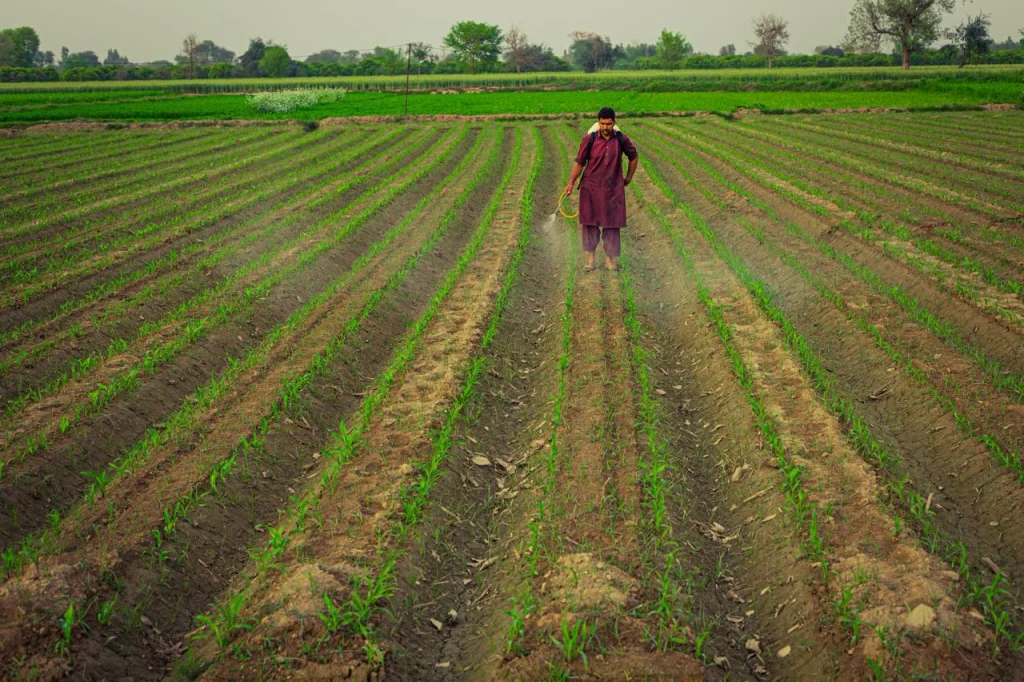
Agricultural fields provide one example of where this approach could be useful.
In some environments, crops can remain relatively healthy even when pathogens capable of causing disease are present. These disease-suppressive soils may contain microbial communities with biological properties that interfere with pathogens or otherwise contribute to plant health.
For researchers searching for new crop-protection mechanisms, such environments can therefore provide valuable clues.
Rather than beginning with an enormous collection of genes and proteins and attempting to test them individually, Soilytix is attempting to combine field observations with genomic data to identify environments where useful biology may be concentrated.
The company has built a permissioned dataset spanning thousands of agricultural field samples, linking microbial communities with pathogen occurrence and disease outcomes. These field observations provide a way to connect genomic information with biological context.
When promising environments are identified, Soilytix’s laboratory can generate deep long-read genomic data from those samples. The resulting datasets can then be analysed using LOAM alongside established bioinformatics approaches to identify and prioritise candidate genes and proteins.
The process is intended to create a bridge between environmental biology and experimental discovery.
Instead of asking an AI system to search the entire biological universe for an answer, researchers can start with a defined biological problem, identify environments where relevant activity may already be occurring, characterise the microbial communities in those environments and then use computational models to narrow the list of potential candidates.
The final candidates can subsequently be subjected to laboratory testing.
The objective is not to eliminate experimentation, but to make experimentation more focused.
Turning a large search space into a smaller one
Biological discovery is often constrained by the sheer scale of the search space. Microbial communities contain vast numbers of genes, many of which have unknown functions. Even when researchers identify sequences that appear potentially interesting, determining which ones are worth producing, testing and developing can require substantial time and resources.
Genomic AI can potentially help reduce that burden by ranking candidates according to predicted biological properties.
For crop-protection companies and developers of biological products, this could create a more structured route from an agricultural observation to an experimentally testable molecule or mechanism.
“The value for a crop-protection partner isn’t access to another AI model,” said Bruno Steinkraus, Founder and CEO of Soilytix. “It is being able to start with a defined pathogen or product objective and work towards biological candidates that can actually be tested.”
That distinction reflects the company’s broader strategy. LOAM is being positioned not as a standalone software product, but as one component of an integrated discovery platform combining field data, environmental genomics, computational biology and laboratory validation.
The approach could be particularly relevant to biological crop protection, where researchers are exploring alternatives and complements to conventional chemical products. Naturally occurring microorganisms and their proteins can represent a potentially rich source of new mechanisms, but finding promising candidates within complex environmental communities remains a significant challenge.
Soilytix’s approach is designed to use the environment itself as a source of biological leads.
Opening discovery partnerships
With the release of LOAM and the accompanying preprint, Soilytix is making its approach available for broader scientific evaluation while continuing to develop its discovery pipeline.
The company says it is opening a limited number of discovery pilots with crop-protection and biologicals companies for 2027.
These pilots are intended to explore how the company’s combination of field-derived data, long-read environmental sequencing and genomic AI can be applied to specific discovery objectives.
For potential partners, the focus is therefore less on adopting a generic AI platform and more on using the technology to answer concrete biological questions: Which environments are most likely to contain useful biology? Which genes or proteins are worth investigating? And which candidates should move forward into laboratory testing?
LOAM represents Soilytix’s effort to bring environmental genomic diversity into that process.
By training genomic AI models on microbial genomes recovered directly from soil, sediment and water, the company aims to expand the biological information available to computational discovery systems. Combined with field-level evidence and experimental validation, the approach could provide a way to move from naturally occurring biological signals to a more focused set of candidates for crop-protection research.
The broader premise is straightforward: nature contains an enormous library of biological solutions, but finding the right ones requires knowing where to search.
Soilytix is building its discovery platform around that idea—using real-world environmental evidence to guide genomic sequencing, using AI to narrow the resulting search space, and using laboratory experiments to determine which candidates ultimately work.
Source Link:https://www.businesswire.com/