

Pivot Bio CTO Travis Frey Reveals Nitrogen’s Future in Powerful TEDxFargo Talk
Pivot Bio Chief Technology Officer Travis Frey, Ph.D., is bringing attention to the potential of microbial technology to transform agricultural nitrogen management through his newly released TEDxFargo presentation, The Smallest Factory in the World. The talk explores how advances in biotechnology are enabling scientists to develop new approaches to nitrogen production and delivery, potentially creating additional opportunities for farmers to improve crop nutrition, productivity and efficiency.
Frey’s presentation focuses on the science behind biological nitrogen and the role naturally occurring soil microbes can play in helping crops access this essential nutrient. By applying advances in microbial engineering, Pivot Bio aims to develop nitrogen-producing microbes that work alongside existing agricultural fertility systems, giving farmers another option for managing one of the most important inputs in crop production.
With more than 20 years of experience in crop science, Frey has spent much of his career exploring how scientific innovation can improve plant health and agricultural performance. He is widely recognized for his contributions to crop technology, having been named as an inventor on dozens of patents and authored numerous publications covering plant genetics, disease resistance, crop performance and related agricultural technologies.
His previous research has contributed to the development of genetic traits and disease-resistance technologies deployed across hundreds of millions of corn acres worldwide. Today, his work at Pivot Bio is centered on advancing biological nitrogen fertilizer and exploring how microbial technology can contribute to the future of crop nutrition.
Understanding Nitrogen’s Role in Agriculture
Nitrogen is one of the most essential nutrients required for healthy plant growth. It supports numerous biological processes that enable crops to develop, produce biomass and deliver agricultural yields. For major crops such as corn, access to sufficient nitrogen is particularly important throughout the growing season.
Although nitrogen makes up approximately 80% of Earth’s atmosphere, plants cannot directly use the nitrogen gas present in the air. Farmers have therefore relied on fertilizer systems to supply crops with nitrogen in forms they can absorb and utilize.
For more than a century, the Haber-Bosch process has played a central role in modern agriculture by converting atmospheric nitrogen into ammonia, which can be used to manufacture synthetic nitrogen fertilizers. This development fundamentally changed agricultural production and helped support the expansion of global food supplies.
However, synthetic fertilizer production and distribution also create dependencies on manufacturing infrastructure, energy markets and international supply chains. Changes in these systems can affect fertilizer availability and prices, creating challenges for farmers who must plan input purchases and manage production costs.
Nature offers another way to make atmospheric nitrogen available to plants. Certain soil microorganisms can convert nitrogen gas into forms that plants can use through a biological process known as nitrogen fixation.
The challenge is that many naturally occurring nitrogen-fixing microbes reduce or stop their nitrogen-producing activity when they detect other available nitrogen sources in the soil. This natural regulatory mechanism can limit their ability to continue fixing nitrogen in agricultural environments where conventional fertilizers are present.
As Frey explains in his TEDxFargo presentation, “Nature solved this problem billions of years before we did.” His discussion examines how scientists are drawing on this biological process while using biotechnology to overcome some of its limitations.
How Microbial Technology Can Improve Nitrogen Delivery
Pivot Bio’s approach centers on understanding the genetic mechanisms that regulate nitrogen fixation in microorganisms. According to the company, its scientists identified genes that function as an off-switch, signaling microbes to stop fixing atmospheric nitrogen when other nitrogen sources become available.
Through gene editing, Pivot Bio scientists have worked to quiet this natural regulatory mechanism. The objective is to enable the company’s engineered microbes to continue producing nitrogen even when other nitrogen sources are present in the soil.
This approach is designed to make nitrogen available directly around plant roots, where crops can access and use the nutrient. Rather than relying exclusively on fertilizer applied to the soil, biological nitrogen technology introduces another mechanism for supplying nitrogen during crop development.
The technology is intended to complement existing fertility programs rather than eliminate the need for conventional fertilizers. Farmers would still need to consider their crops’ nutrient requirements, soil conditions, environmental factors and expected yields when determining the appropriate combination of inputs.
Nevertheless, microbial nitrogen technology could provide additional flexibility in crop nutrition management. By developing biological products that work alongside established fertilizer practices, Pivot Bio aims to give farmers more options for meeting crop nitrogen requirements.
The potential benefits extend beyond supplying an additional source of nitrogen. Improvements in biological nitrogen fixation could help increase nitrogen-use efficiency, support crop performance and expand the range of tools available to farmers as they manage input costs and production risks.
Realizing these opportunities will depend on continued scientific development, field performance and the ability to deliver consistent results under different agricultural conditions.
Faster Innovation Through Microbial Science
A central theme of Frey’s presentation is the speed at which biotechnology can advance compared with some traditional agricultural research methods.
Conventional plant breeding often requires several years to develop, evaluate and commercialize new crop varieties. The process can involve multiple growing seasons, extensive testing and careful assessment of how plants perform across different environments.
Microbial technology offers a different innovation pathway. Scientists can design microbial strains, conduct laboratory tests, evaluate results and refine their approaches through repeated development cycles. This process can allow researchers to investigate new biological characteristics more rapidly than some conventional breeding programs.
Frey describes the difference in his presentation: “In plant breeding, developing a new variety often took a decade. With microbes, we can design, build, test, learn, and improve in weeks. What nature might take thousands of years to accomplish, we can now explore in months.”
The comparison highlights the potential for accelerated experimentation in microbial engineering. By shortening the time between designing a biological solution and evaluating its performance, researchers can explore more possibilities and refine promising technologies.
For Pivot Bio, this faster development cycle is particularly relevant to the effort to improve nitrogen production by microbes. Continued research could help scientists investigate ways to increase the amount of nitrogen microorganisms deliver, improve their activity throughout the growing season and strengthen their contribution to crop nutrition.
The ultimate value of these advances will depend on translating laboratory progress into reliable agricultural products that perform under real-world field conditions. Even so, the ability to test and improve microbial systems at a faster pace offers a potentially important advantage for agricultural innovation.
Frey emphasizes that the future possibilities are a major source of motivation for his work.
“What excites me most isn’t where we are today. It’s how fast biology can improve,” he says.
His comments reflect a broader vision of biotechnology as an evolving platform rather than a finished solution. As scientists develop a better understanding of microbial behavior and plant-microbe interactions, they can continue investigating new ways to improve the performance of biological products.
The Smallest Factory in the World
The title of Frey’s TEDxFargo talk, The Smallest Factory in the World, reflects the central idea behind biological nitrogen technology.
A nitrogen-producing microbe is microscopic, yet it can perform a function that is highly significant for agricultural production. Through microbial engineering, scientists seek to develop organisms that can produce nitrogen in association with growing crops.
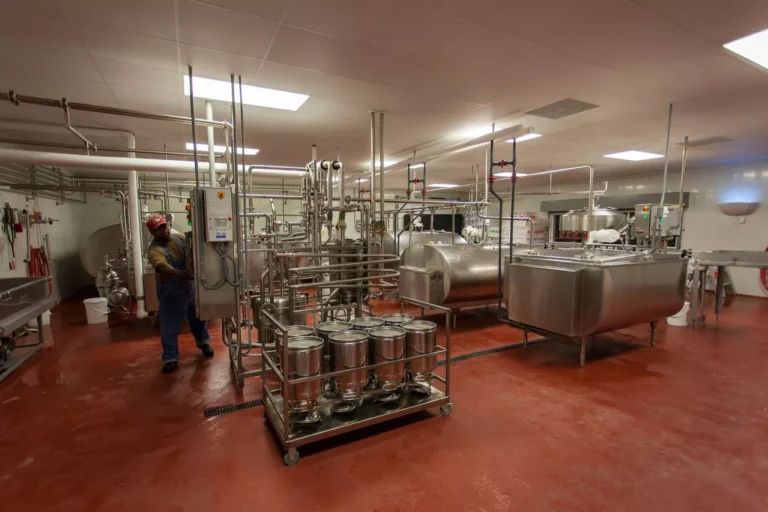
The microbes can be manufactured, formulated into agricultural products and distributed at commercial scale. These products can then be applied in ways designed to bring nitrogen-producing microorganisms into contact with plant roots.
This approach connects advances in microbiology and biotechnology with the practical requirements of modern farming. Instead of treating nitrogen solely as a manufactured agricultural input, biological nitrogen technology seeks to use microorganisms as active participants in the process of making nutrients available to crops.
The concept also highlights the importance of translating scientific discoveries into products that farmers can use within their existing operations. A biological product must be practical to manufacture, transport, store and apply, while delivering performance that meets farmers’ expectations.
As the technology advances, improvements in microbial production and formulation could help expand its commercial applications. The development of scalable manufacturing processes is therefore an important part of bringing biological nitrogen innovations from research laboratories to agricultural fields.
Domestic Manufacturing and Fertilizer Supply Resilience
Beyond its biological approach, Pivot Bio’s strategy also emphasizes domestic manufacturing capabilities. These capabilities could offer farmers an additional source of nitrogen products that is less directly dependent on some of the international supply chains associated with conventional fertilizer markets.
Global fertilizer markets have experienced considerable volatility in recent years, influenced by energy costs, geopolitical developments, production disruptions and transportation challenges. Such volatility can complicate purchasing decisions and create uncertainty for agricultural producers planning their input requirements.
Biological nitrogen products are not entirely independent of manufacturing, distribution or supply-chain considerations. However, domestic production capacity can provide an additional pathway for supplying agricultural inputs and may help diversify the options available to farmers.
For growers, access to multiple nitrogen sources could contribute to more flexible nutrient management strategies. The extent of any economic or operational advantage will depend on product performance, availability, pricing and how biological inputs fit into individual farming systems.
The broader opportunity is to combine biological innovation with scalable production and practical delivery systems, potentially making microbial nitrogen an increasingly important component of modern agriculture.
Advancing the Future of Crop Nutrition
As chief technology officer of Pivot Bio, Frey leads the company’s research and development organization and oversees the continued advancement of its microbial nitrogen technology. His background in crop science, genetics and agricultural innovation informs the company’s efforts to develop biological approaches that address challenges in crop nutrition.
His TEDxFargo presentation brings these scientific concepts to a wider audience, explaining how microorganisms can be engineered to perform useful functions in agricultural systems. It also underscores the importance of continued research in developing technologies that can work alongside established farming practices.
The future of biological nitrogen will depend on advances in microbial science, product development, field validation and commercial deployment. Questions surrounding performance across different soils and climates, integration with conventional fertilizer programs and economic value for growers will remain important as the technology develops.
Still, microbial engineering provides researchers with new opportunities to explore how nitrogen can be produced and delivered to crops. By combining the natural capabilities of microorganisms with modern biotechnology, Pivot Bio is working to establish biological nitrogen as an additional tool for agricultural nutrient management.
Through The Smallest Factory in the World, Frey presents a vision in which microscopic organisms could play a larger role in supporting crop production. His message is that the future of agricultural innovation will not depend solely on improving existing inputs, but also on discovering new ways to work with biological systems.
As scientists continue to design, test and refine microbial technologies, biological nitrogen could become an increasingly capable part of the broader crop nutrition system, offering farmers another option for managing nitrogen and supporting agricultural productivity.
Source link:https://www.businesswire.com/