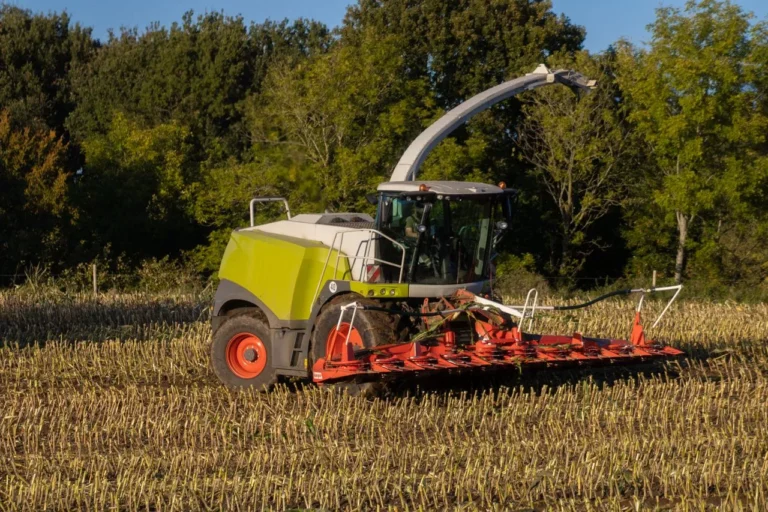

Modern forestry machinery operates in some of the most challenging environments in the off-road industry. Harvesters, forwarders and other specialized machines routinely work in remote forests, on steep slopes, uneven terrain and under constantly changing operating conditions. In these environments, engine performance is closely connected to productivity, fuel consumption, reliability and overall machine uptime.
For AGCO Power, meeting these demands starts with developing engines specifically suited to demanding off-road applications. Rather than adapting an engine designed for another operating environment, the company focuses on technologies capable of delivering reliable performance when forestry machines are exposed to heavy and rapidly changing workloads.
“Forestry applications place very different demands on an engine than on-road applications do. The engine must respond instantly to changing loads, work seamlessly with the machine’s hydraulic and control systems, and keep it productive in conditions where downtime is costly,” says Juha Tervala, Managing Director at AGCO.
AGCO Power will showcase its latest diesel engine technology for demanding off-road applications at INTERFORST 2026, taking place at Messe München from October 15–18. Visitors can meet the company in the Systems & Components area at booth B6.141.
Forestry machines face operating conditions that can change within seconds. A harvester, for example, needs consistent and responsive power while its harvesting head performs several functions, including feeding, delimbing and cutting trees. Each operation can create different power demands on the engine.
Forwarders face another set of challenges. These machines transport heavy loads of timber across forests, often travelling over soft ground, slopes and uneven surfaces. The engine must therefore deliver controlled power and torque while maintaining efficiency and reliability throughout the working cycle.
In such applications, engine performance cannot be measured simply by maximum horsepower. The ability to respond quickly to changing loads, maintain torque at lower engine speeds and operate efficiently across different conditions is equally important.
Lubrication and engine reliability are also critical considerations. Forestry equipment can spend extended periods working on inclines or uneven ground, placing additional demands on engine systems. A powertrain designed specifically for off-road applications must therefore be capable of delivering dependable performance even when machines are working in difficult positions.
“Performance in forestry is created by the whole machine. The engine, hydraulics, software and serviceability must be designed as one integrated system,” says Jarno Ratia, Director of Product Management at AGCO Power.
AGCO Power’s CORE engine platform has been developed around the requirements of modern off-road machinery. Key characteristics include high torque, strong load response, fuel efficiency, durability and adaptability across different applications.
The platform is also designed with future powertrain development in mind. Its architecture can support emerging technologies such as hybrid systems and alternative fuels, giving manufacturers greater flexibility as off-road powertrains continue to evolve.
The CORE family currently includes three engine options covering different power requirements.
The four-cylinder CORE50 can deliver up to 165 kW of power and 950 Nm of torque. The six-cylinder CORE75 is rated at up to 250 kW and 1,450 Nm. The newest member of the family, the CORE80, provides 252 kW and maximum torque of 1,680 Nm.
This modular approach allows the engine platform to serve a variety of applications while maintaining a common technology foundation.

For forestry equipment manufacturers, such flexibility can be valuable because different machines require different combinations of power, torque and operating characteristics. A scalable engine family can also simplify integration and support commonality across equipment ranges.
Reliability is only one part of keeping forestry equipment productive. When machines operate far from workshops and service facilities, easy maintenance becomes equally important.
Forestry machinery can operate for long hours in remote locations, where even relatively simple maintenance tasks can become challenging. Engineers therefore need to consider accessibility, ergonomics and the time required for routine service when designing an engine and its surrounding systems.
“Good serviceability supports both people and productivity. In cold, dark or remote conditions, a well-designed service layout makes routine maintenance more ergonomic and efficient, while helping the machine return to productive operation sooner,” Ratia explains.
Reducing unnecessary complexity within the engine system can also contribute to serviceability. AGCO Power’s CORE engines achieve low emissions without using exhaust gas recirculation, or EGR, and without two-stage turbocharging.
This approach contributes to a simpler engine architecture and reduces the number of components associated with those systems. For equipment operating in remote environments, a straightforward design can help simplify maintenance and support long-term reliability.
Fuel consumption is another major consideration for forestry operators. Machines often work for long operating cycles, meaning even relatively small improvements in fuel efficiency can have a meaningful impact on total operating costs.
AGCO Power’s CORE engines have demonstrated fuel-efficiency performance in independent DLG PowerMix testing, including test reports 7547, 7552, 7435 and 7599.
DLG PowerMix testing is conducted on tractors rather than forestry machines, so the results should not be interpreted as direct fuel-consumption figures for harvesters or forwarders. However, the tests provide independent evidence of the efficiency of the CORE engine platform across different load conditions and engine-speed ranges.
The results also highlight a broader principle in modern off-road equipment: fuel efficiency depends on the complete powertrain.
An efficient engine needs to work effectively with the transmission, hydraulic system and machine-control software. Coordinating these systems can help the machine deliver the required power while avoiding unnecessary fuel consumption.
For forestry machinery, there is no single performance characteristic that determines productivity. High power is important, but it must be combined with fast load response, durability, fuel efficiency, serviceability and reliable operation.
“Lower fuel consumption immediately affects operating costs. But efficiency cannot come at the expense of response, durability or uptime. That balance is where AGCO Power’s off-road experience makes the difference,” says Ratia.
As forestry equipment becomes increasingly sophisticated, the integration between engines, hydraulics, electronic controls and future powertrain technologies is likely to become even more important. Engine manufacturers will need to deliver not only higher performance, but also systems that can adapt to changing machine requirements and evolving emissions and fuel technologies.
AGCO Power’s CORE platform is positioned around this approach, combining scalable engine architecture with performance characteristics aimed at demanding off-road applications.
For forestry operators, the objective remains straightforward: machines need to keep working efficiently and reliably, even when conditions are difficult and support facilities are far away. Purpose-built engine technology can play a central role in achieving that goal by helping manufacturers build machines capable of delivering consistent productivity in the demanding environments where forestry work takes place.
Source Link:https://www.businesswire.com/