
Agribusiness Empowering Africa’s Next-Generation Farmers Through Satellite-Connected IoT and Data-Driven Solutions
In a groundbreaking initiative designed to reshape the future of agriculture in Southern Africa, SES, a global leader in space-based connectivity solutions, has partnered with IoT technology specialist Advannotech and a network of service providers to introduce satellite-enabled smart farming solutions to South Africa’s next generation of agricultural entrepreneurs.
The collaboration is centered on equipping young farmers with advanced digital tools that bring precision, efficiency, and sustainability to modern agribusiness—empowering them to make informed, data-driven decisions that improve productivity while conserving critical resources.
Technology Meets Agricultural Training
At the heart of the initiative is its integration with the Enterprising Africa Regional Network (EARN), a hands-on training platform dedicated to developing Africa’s emerging agricultural leaders. Through its youth agribusiness subsidiary, African Greeneurs, EARN blends practical farming experience with entrepreneurship training and innovation-driven problem solving.
The program operates from a climate-smart training farm located in Centurion, South Africa, where participants learn not only how to cultivate crops but also how to run sustainable agricultural enterprises. By embedding satellite-enabled Internet of Things (IoT) technology into the training environment, the initiative exposes young farmers to real-world digital agriculture systems—tools that are increasingly essential in a sector under pressure from climate change, water scarcity, and rising food demand.
Over a three-month proof-of-concept phase, the partners successfully demonstrated that combining satellite connectivity with IoT sensors could deliver consistent, real-time insights even in areas with unreliable or nonexistent cellular coverage. This milestone validated the concept and laid the foundation for broader implementation.
Overcoming Connectivity Barriers
Agriculture across much of rural Africa faces a persistent digital divide. While mobile networks have expanded significantly in recent years, coverage gaps remain common in farming regions. These connectivity challenges often limit farmers’ access to precision tools that depend on real-time data transmission.
Before the introduction of satellite-enabled IoT systems, EARN’s training farm encountered repeated technical hurdles. Cellular connectivity interruptions made it difficult to monitor growing conditions accurately or respond promptly to environmental changes. As a result, decision-making was often based on estimation rather than precise measurement.
The new system addresses this challenge by bypassing terrestrial cellular infrastructure entirely. Sensors installed across the farm collect critical data—including soil moisture, soil temperature, water levels, and environmental factors such as light intensity, carbon dioxide concentration, humidity, and air temperature. This information is transmitted via LoRaWAN (Long Range Wide Area Network) technology to satellite links operated by SES, which then relay the data to a cloud-based backend platform.
Because satellite connectivity does not rely on local cell towers, the system ensures stable, uninterrupted communication regardless of location. For remote farms across Africa, where network infrastructure may be inconsistent or absent, this capability represents a transformative breakthrough.
From Guesswork to Precision
Joshua Ngoma, Founder and Chief Enabler of EARN, describes the shift as revolutionary. Prior to deploying the IoT devices, irrigation schedules were largely determined by routine rather than necessity.
“Before these IoT devices were put in the field, everything was guesswork,” Ngoma explained. “We used to water three times a day. But with the information you get on your phone or computer, you know exactly when to water. That saves power and conserves water, a very limited resource.”
This precision irrigation capability has immediate environmental and economic benefits. South Africa, like many regions across the continent, faces mounting water stress due to climate variability and prolonged drought cycles. By irrigating only when soil moisture levels fall below optimal thresholds, farmers can significantly reduce water consumption while maintaining—or even increasing—crop yields.
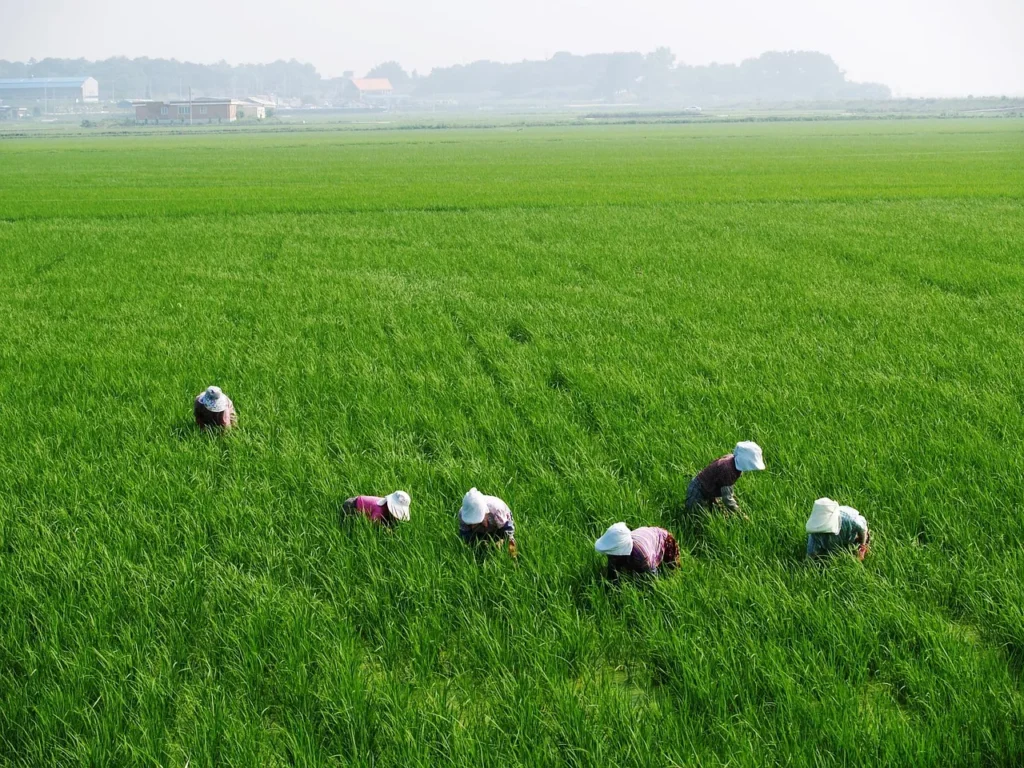
The system also reduces energy usage associated with pumping water, lowering operational costs for farmers. In a sector where margins are often thin, these savings can meaningfully improve profitability and resilience.
Real-Time Alerts, Real-World Impact
Beyond irrigation optimization, the platform provides real-time alerts when environmental conditions deviate from predefined optimal ranges. If humidity levels spike unexpectedly, temperatures drop sharply, or CO₂ levels fluctuate, farmers receive instant notifications on their mobile devices or computers.
This early-warning capability enables swift intervention—whether adjusting irrigation schedules, modifying greenhouse ventilation, or implementing protective measures during extreme weather events.
The ability to act immediately rather than react retrospectively can prevent crop stress, reduce losses, and improve overall farm performance. For trainees at EARN, exposure to these digital tools offers invaluable practical experience, preparing them to adopt and scale such systems in their own ventures.
Driving Food Security and Economic Growth
The broader objective of the project extends far beyond technology deployment. It seeks to address two interlinked challenges facing Africa: food insecurity and youth unemployment.
Agriculture remains a major employer across the continent, yet productivity gaps persist. By equipping young farmers with digital tools and business acumen, the initiative aims to cultivate a new generation of agripreneurs capable of increasing yields, improving sustainability, and contributing to local economic development.
Satellite-enabled IoT systems support climate-smart agriculture—an approach that emphasizes adaptation to climate change, efficient resource use, and reduced environmental impact. With climate variability intensifying across sub-Saharan Africa, these capabilities are becoming essential rather than optional.
Hans Geldenhuys, Director for Africa at SES, emphasized the broader significance of the project: “Through this project we have demonstrated that satellite-enabled IoT in agriculture will assist farmers in making data-driven decisions for higher yields and sustainability, irrespective of location.”
His remarks underscore a key principle: geography should no longer determine access to digital innovation. Satellite connectivity levels the playing field, enabling farmers in even the most remote areas to participate in the data-driven agricultural economy.
A Model for Scalable Innovation
The successful proof-of-concept phase signals strong potential for scaling the solution beyond the Centurion training farm. With further investment and partnerships, similar satellite-enabled IoT systems could be deployed across rural communities throughout South Africa and neighboring countries.
Such expansion would not only enhance farm-level productivity but also generate valuable aggregated data. Over time, anonymized data sets could support broader agricultural planning, climate resilience strategies, and supply chain optimization.
Importantly, the initiative demonstrates the power of cross-sector collaboration. By bringing together space technology expertise, IoT innovation, and grassroots agricultural training, the partners have created a holistic model that integrates connectivity, data analytics, and human capacity building.
Building the Future of African Agribusiness
As Africa’s population continues to grow, so too does the demand for food, employment opportunities, and sustainable development pathways. Technology alone cannot solve these challenges—but when paired with education, entrepreneurship, and inclusive access, it becomes a powerful catalyst.
The collaboration between SES, Advannotech, and EARN illustrates how advanced satellite systems can serve practical, ground-level needs. For young farmers participating in the program, the experience goes beyond theoretical instruction. They learn to interpret data dashboards, respond to sensor alerts, and understand how digital insights translate into healthier crops and stronger businesses.
Ultimately, the project represents more than a technological upgrade; it marks a shift toward evidence-based farming practices that maximize efficiency while safeguarding scarce natural resources. By embedding satellite-enabled IoT solutions into youth training programs today, the partners are helping cultivate a resilient, innovative agricultural sector prepared to meet tomorrow’s challenges.
As proof-of-concept results transition into long-term implementation, this model could serve as a blueprint for other regions seeking to bridge the digital divide in agriculture. In doing so, it reinforces a powerful message: with the right connectivity and tools, Africa’s next generation of farmers can lead the transformation toward sustainable, data-driven agribusiness.
Source Link:https://www.businesswire.com/