

Blueberry Blueprint: Industry Titans Gather in Jianshui to Map the Future
The global blueberry market is undergoing a seismic shift, and at the heart of this transformation lies the mist-shrouded, sun-drenched hills of Yunnan Province. On December 19, the Third Yunnan Blueberry Conference convened in Jianshui County, Honghe Hani and Yi Autonomous Prefecture. This landmark event, highlighted by the release of the “Xinhua–Yunnan Honghe Blueberry Industry Development Index Report,” served as a definitive declaration of China’s ambition to dominate the high-end berry market.
Stretching over three days, the conference brought together a high-caliber assembly of agronomists, logistics experts, financial heavyweights, and international purchasers. Their goal? To dissect the “Honghe Model” and map out a future where the blueberry transitions from an exotic luxury to a staple of the modern Chinese diet.
The Rise of a Super-Fruit Powerhouse
The scale of the blueberry’s ascent in China is nothing short of breathtaking. Historically viewed as a “premium niche” fruit found only in high-end urban boutiques, the blueberry has achieved mass-market penetration with startling speed.
Data shared during the conference underscores this momentum:
- Global Market Value: Projected to exceed $32 billion by 2025.
- China’s Footprint: By the close of 2024, China’s total planting area surpassed 1.4 million mu (approximately 93,000 hectares).
- Frequency of Purchase: What was once an occasional treat is now a weekly grocery item for millions, driven by a growing middle class focused on health, antioxidants, and convenience.
Why Honghe? The “Golden Latitudes” of Viticulture
In the competitive landscape of Chinese agriculture, Honghe Prefecture has emerged as a titan. The conference highlighted why this specific region in southwest China has become the “Blueberry Capital.”
1. Geographic and Climatic Superiority
Honghe benefits from a unique microclimate that allows for off-season production. When much of the Northern Hemisphere is dormant, Honghe’s greenhouses are bustling. This “early-to-market” advantage ensures that Honghe blueberries fetch premium prices during windows of low global supply.
2. Scientific Quality Indicators
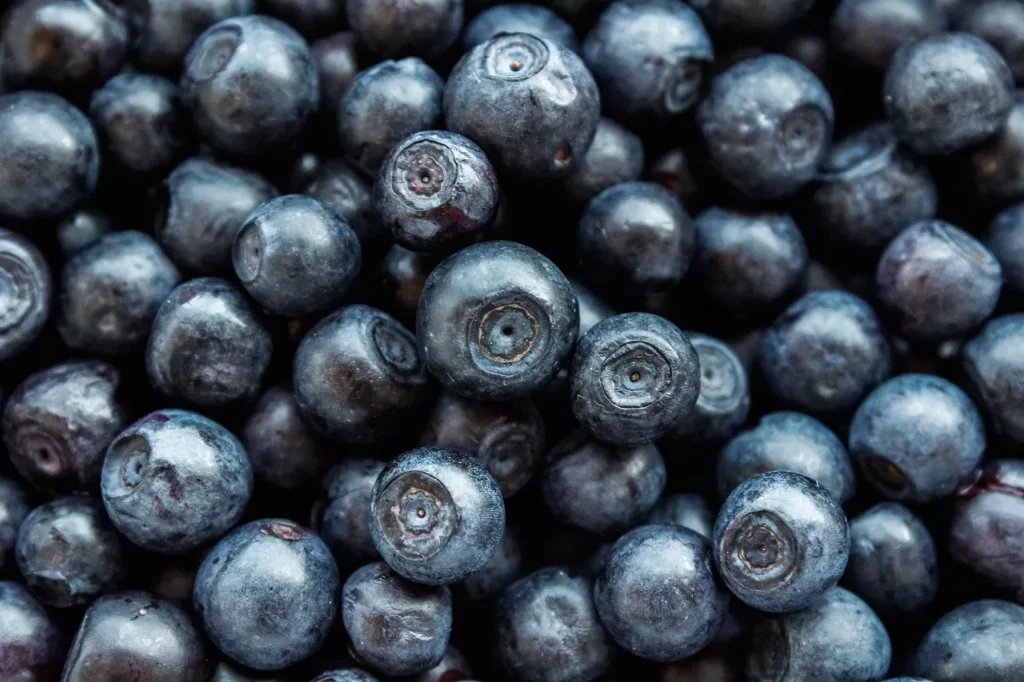
It isn’t just about quantity; it’s about the chemistry of the fruit. Experts at the conference noted that Honghe-grown berries consistently outperform competitors in three critical areas:
- Sweetness (Brix level): Higher natural sugar content.
- Firmness: Essential for long-distance logistics and shelf life.
- Anthocyanin Content: The “superfood” component that attracts health-conscious consumers.
3. Market Dominance by the Numbers
As of October 2025, Honghe’s output exceeded 130,000 tons. To put that in perspective, this single prefecture accounts for:
- 60% of all blueberry production in Yunnan Province.
- 16% of the entire national output of China.
Infrastructure and Innovation: Building the Full Chain
A recurring theme of the conference was that “growing” the fruit is only half the battle. To sustain growth, the industry must innovate across the entire value chain—from the laboratory to the dinner table.
The Yunnan Blueberry Research Institute
One of the event’s most significant milestones was the signing of a cooperation agreement to establish the Yunnan Blueberry Research Institute. This facility will focus on “breeding breakthroughs,” aiming to develop indigenous varieties that are more resilient to local pests and tailored to the flavor profiles preferred by Chinese consumers.
Financial and Technological Support
The “full industrial chain” approach was further solidified through a strategic agreement to enhance financial support. This ensures that small-scale farmers and large corporate plantations alike have the liquidity needed to invest in:
- Substrate Cultivation: Moving away from traditional soil to precise, nutrient-rich mediums.
- Water-Fertilizer Integration: Smart systems that deliver exact dosages, reducing waste and environmental impact.
“The transition from ‘traditional farming’ to ‘precision horticulture’ is the only path to maintaining our edge in the global market,” noted one industry leader during the technical forum.
Strategic Matchmaking and Global Branding
The conference was as much about business as it was about science. A closed-door matchmaking session for the new harvest season allowed major domestic retailers and international exporters to secure contracts directly with growers. This bypasses traditional middleman layers, ensuring fresher fruit for consumers and higher margins for the farmers.
Furthermore, the discussion on branding took center stage. In a world where “a blueberry is just a blueberry,” the Xinhua–Yunnan Honghe Index provides a data-driven framework to differentiate Honghe berries as a “geographic indication” brand. By standardizing quality metrics, Honghe aims to create a brand halo similar to Champagne or Wagyu beef—where the origin itself is a guarantee of quality.
The Road Ahead: Scale, Greenery, and Brand
As the Third Yunnan Blueberry Conference drew to a close, the roadmap for the future was clear. Honghe Prefecture is not resting on its laurels. The local government pledged to:
- Optimize the Business Environment: Streamlining regulations to attract more foreign and domestic investment.
- Environmental Stewardship: Implementing “Green Growth” initiatives to ensure that the rapid expansion of mu-count doesn’t come at the cost of Yunnan’s famous biodiversity.
- Digital Integration: Utilizing the new Index Report to provide real-time market data to growers, helping them avoid price crashes and overproduction.
The transformation of the blueberry from a “premium product” to a “mainstream essential” is a blueprint for China’s broader agricultural modernization. With Honghe leading the charge, the next decade of the global blueberry trade looks set to be written in the red soil of Yunnan.
Source Link:https://www.businesswire.com/