General Mills (NYSE: GIS) has released its 2026 Global Responsibility Report, offering a comprehensive account of the company’s environmental, social, and governance (ESG) performance during its 2025 fiscal year, spanning May 27, 2024, through May 25, 2025. The report represents the company’s 56th consecutive year of public disclosure on sustainability and corporate responsibility, underscoring a long-standing commitment to transparency and accountability. It also highlights how the company is advancing its “Standing for Good” philosophy, a cornerstone of its broader Accelerate business strategy.
In reflecting on the company’s progress, Chairman and Chief Executive Officer Jeff Harmening emphasized the dual mission that has guided General Mills for more than a century and a half. He noted that for 160 years, the company has focused not only on producing food that resonates with consumers worldwide but also on contributing positively to society and the environment. Harmening expressed optimism about the company’s achievements over the past year and reaffirmed its commitment to fostering resilient communities and a healthier planet for future generations.
At the heart of General Mills’ operations lies its commitment to delivering high-quality, safe, and nutritious food products. With a portfolio of more than 100 brands distributed across over 100 countries, the company continues to adapt to evolving consumer preferences while maintaining rigorous standards of quality and safety.
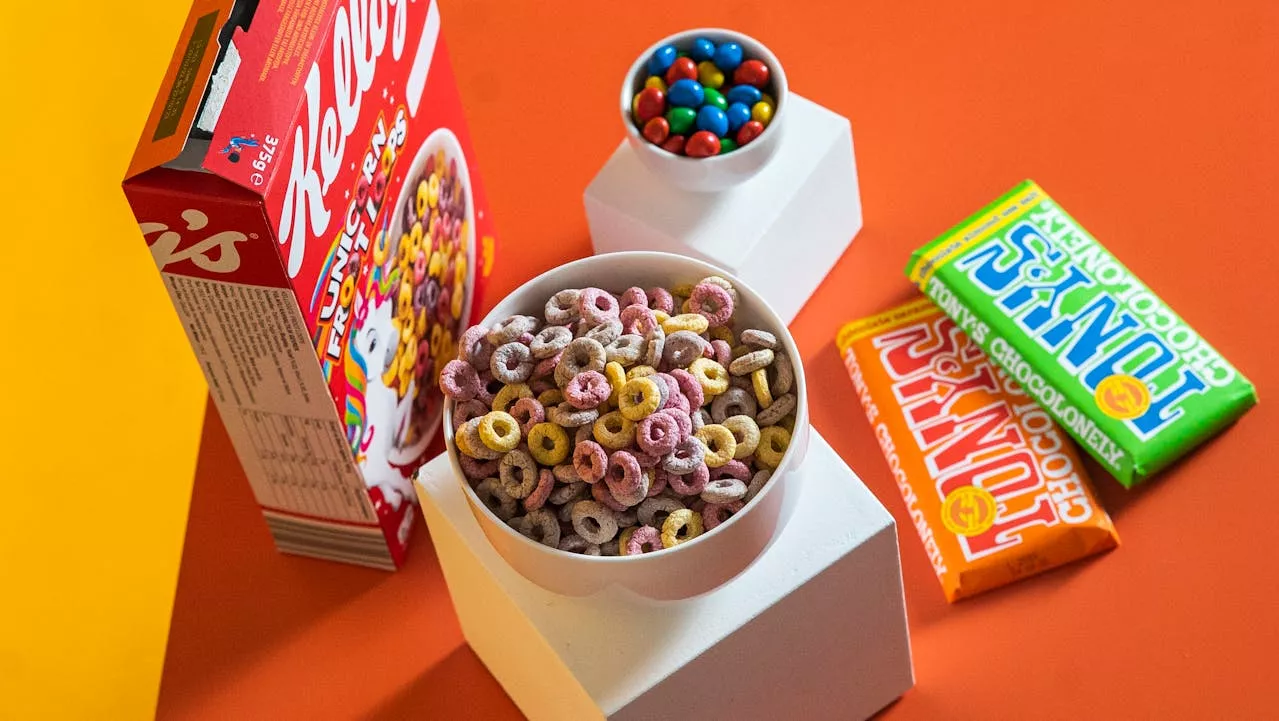
One of the most notable developments during fiscal 2025 was the company’s initiative to remove certified colors from its product lines in the United States. Announced in June 2025, this effort aims to eliminate certified colors from U.S. cereals and K-12 school food offerings by the summer of 2026, with a broader transition across its entire U.S. retail portfolio targeted for completion by the end of 2027. By March 2026, General Mills had already achieved a significant milestone by ensuring that all K-12 school foods are produced without certified colors, surpassing its initial timeline and demonstrating strong execution capabilities.
In addition to reformulating products, General Mills has maintained its leadership position as the largest U.S. producer of natural and organic packaged foods. Approximately one in every ten products sold in North America is either certified organic or made with organic ingredients, reflecting sustained consumer demand for clean-label and environmentally conscious food choices.
The company has also continued to strengthen its nutritional profile across its offerings. Its well-known Big G cereal line, for example, ensures that every serving contains at least eight grams of whole grains, with many products exceeding that threshold. Beyond cereals, General Mills offers a diverse range of products tailored to specific dietary needs, including high-protein, heart-healthy, gluten-free, and low-carbohydrate options. In fiscal 2025, 21 percent of its U.S. retail sales volume included products that are a good source of dietary fiber, highlighting ongoing efforts to improve nutritional value at scale.
In the pet food segment, the company expanded its portfolio through its Blue Buffalo brand, introducing “Love Made Fresh,” a new line of fresh pet food. This move reflects a broader industry trend toward premiumization and fresh feeding options in pet nutrition, positioning General Mills to capture growth in this rapidly evolving category.
Food waste reduction remains another critical priority. General Mills continues to support MealConnect, an innovative food recovery platform developed by Feeding America. Since its inception in 2014, MealConnect has facilitated the recovery of more than 8.6 billion pounds of surplus food, redistributing it to communities in need and helping to address food insecurity on a massive scale.
Recognizing its dependence on natural resources, General Mills has made significant investments in environmental sustainability, focusing on regenerative agriculture, emissions reduction, and waste management.
A key highlight from fiscal 2025 is the company’s progress in regenerative agriculture. More than 800,000 acres are now engaged in its regenerative agriculture programs, bringing the company more than three-quarters of the way toward its 2030 goal. These programs aim to improve soil health, enhance biodiversity, and build resilience within agricultural supply chains.
Packaging innovation has also been a major area of focus. By weight, 95 percent of General Mills’ packaging is now recyclable or reusable, demonstrating meaningful progress toward reducing plastic waste and supporting a circular economy.
In terms of climate action, the company has achieved a 14 percent reduction in total value chain greenhouse gas emissions compared to its 2020 baseline. Even more notably, Scope 1 and Scope 2 emissions—those directly controlled by the company—have been reduced by 55 percent over the same period. These achievements reflect a combination of operational efficiencies, renewable energy adoption, and collaboration across the supply chain.
Another significant milestone reached in 2025 is the achievement of zero waste to landfill across all wholly owned manufacturing facilities worldwide. This goal, initially set in 2016, ensures that all waste generated at these sites is either recycled, reused, or converted into energy, thereby minimizing environmental impact.
General Mills’ commitment to social responsibility extends beyond its products and environmental initiatives to include its workforce and the communities it serves. The company emphasizes creating a workplace culture that fosters inclusion, belonging, and holistic well-being, enabling employees to thrive both personally and professionally.
Employee engagement remains strong, with 86 percent of the workforce reporting that General Mills is a great place to work. Additionally, 82 percent of employees indicated a strong sense of belonging, reflecting the company’s ongoing efforts to cultivate an inclusive and supportive organizational culture.
Community support is another cornerstone of the company’s “Standing for Good” approach. In fiscal 2025, General Mills contributed more than $83 million in food and charitable donations globally. Through partnerships with nonprofit organizations, the company helped enable over 7.9 billion meals for individuals facing food insecurity, reinforcing its role as a key player in global hunger relief efforts.
Employee-driven philanthropy also plays a vital role. Through its matching gift program, General Mills employees raised more than $2.7 million in support of 2,379 nonprofit organizations. This initiative not only amplifies the impact of employee contributions but also strengthens connections between the company and the communities in which it operates.
Overall, the 2026 Global Responsibility Report illustrates how General Mills continues to integrate sustainability and social impact into its core business strategy. By focusing on its three priority areas—Food, Planet, and People—the company is addressing some of the most pressing challenges facing the global food system, from nutrition and food security to climate change and community resilience.
As General Mills moves forward, its continued emphasis on innovation, transparency, and collaboration will be critical in driving long-term value for stakeholders while contributing to a more sustainable and equitable future.
Source Link:https://www.businesswire.com/