

Rice Methane Cool Effect Expands Superpollutant Portfolio with Mitti Labs Project
Cool Effect, a Bay Area-based nonprofit recognized globally for supporting high-integrity carbon reduction initiatives, has announced a strategic new partnership with Mitti Labs, a climate technology company headquartered in Bengaluru and New York City. The collaboration marks a significant step forward in expanding climate action focused on methane reduction, specifically targeting emissions generated by rice cultivation—one of agriculture’s largest and most overlooked sources of greenhouse gases.
The partnership strengthens Cool Effect’s growing leadership in the superpollutant carbon market, a rapidly emerging sector focused on eliminating highly potent climate pollutants such as methane and ozone-depleting substances. Unlike carbon dioxide, which remains in the atmosphere for centuries, superpollutants trap far more heat over shorter periods, making their reduction one of the fastest and most effective strategies for slowing global warming in the near term.
Over the past two years, Cool Effect has significantly increased its investment in superpollutant reduction initiatives. Between 2024 and 2025, approximately 64% of all carbon credits purchased through the organization were linked to projects targeting superpollutants, including landfill methane capture and ozone-depleting substance destruction. During that period, the nonprofit facilitated the purchase of more than 3.3 million tonnes of superpollutant carbon credits, directing over $36 million in funding directly to project developers and partners worldwide.
These investments have generated immediate, measurable climate benefits through permanent emissions reductions. With the addition of rice methane mitigation to its portfolio, Cool Effect is now broadening its climate solutions beyond landfill and industrial emissions, entering a rapidly scalable agricultural category with global significance.
Under the new collaboration, Cool Effect will make Mitti Labs’ methane reduction carbon credits available to its extensive network of corporate sustainability buyers and individual climate contributors. These credits are generated through improved rice farming practices designed to significantly reduce methane emissions while delivering important environmental and social co-benefits.
Among the most notable additional benefits are increased income opportunities for smallholder farmers and substantial water conservation. Mitti Labs estimates that its rice methane projects can help save approximately 25 billion liters of water in drought-prone and water-stressed regions of India, where agricultural water efficiency is becoming an increasingly urgent priority.
The announcement comes at a pivotal time for the voluntary carbon market. Buyers are increasingly demanding higher-quality credits backed by rigorous scientific verification, transparent methodologies, and measurable environmental and community outcomes. At the same time, the supply of truly scalable and high-integrity carbon projects remains limited, making partnerships like this especially important.
Jodi Manning, Chief Executive Officer of Cool Effect, said the organization’s long-standing focus on methane reduction reflects the urgent need for solutions that deliver immediate climate impact.
“As the carbon market raises the bar on integrity, transparency, and measurable impact, buyers need access to solutions that are not only scientifically rigorous but also scalable,” Manning said. “Methane reduction remains one of the most powerful opportunities for near-term climate action, and Mitti Labs represents an exciting new frontier in this space. Their work delivers permanent methane reductions from rice farming while also improving water efficiency and farmer livelihoods.”
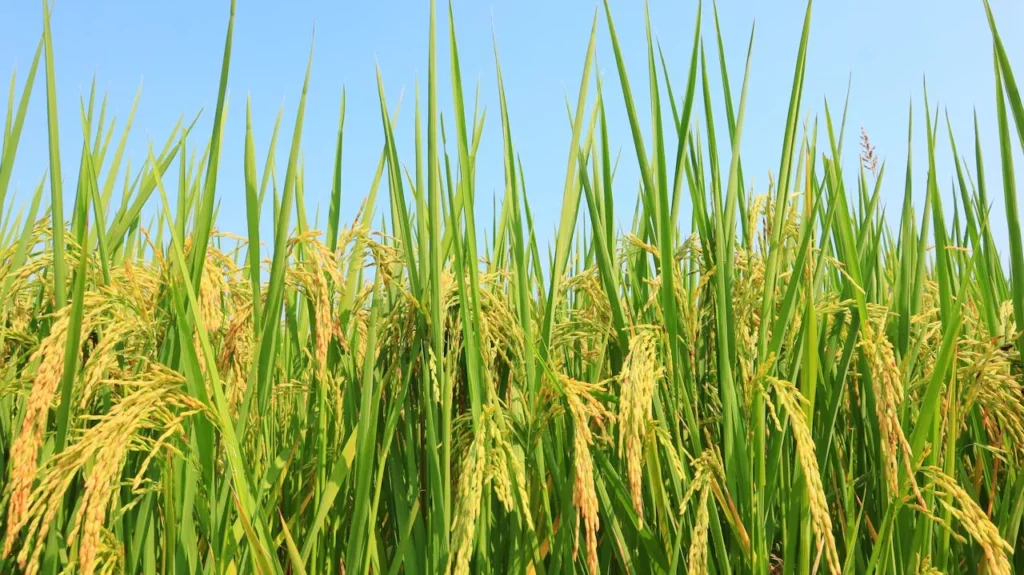
Rice farming is essential to global food security, feeding nearly half of the world’s population. Yet it also presents a significant environmental challenge. Across Asia, rice cultivation covers approximately 150 million hectares—an area nearly three times the size of California. Traditional rice production typically relies on continuous flooding, a farming practice that creates oxygen-deprived soil conditions ideal for methane-producing microbes.
As a result, rice cultivation accounts for an estimated 12% of global methane emissions, making it one of the largest agricultural contributors to climate change. Additionally, rice farming consumes nearly 30% of the world’s freshwater resources, putting further pressure on already stressed water systems.
To address these challenges, Mitti Labs helps farmers transition to a proven irrigation technique known as Alternate Wetting and Drying (AWD). This approach involves periodically draining rice fields rather than keeping them continuously flooded, which dramatically reduces methane production while maintaining crop productivity.
According to the company, AWD can reduce water consumption by as much as 40% and lower methane emissions by up to 50%, all without sacrificing crop yields. This makes it an attractive solution not only for climate mitigation but also for improving farm resilience and sustainability.
Since its founding, Mitti Labs has worked with more than 70,000 farmers across six Indian states, helping them adopt climate-smart agricultural practices at scale. Its farmer-centered implementation model focuses on education, incentives, and technology-enabled monitoring to ensure both environmental and economic benefits are realized.
A key differentiator for Mitti Labs is its advanced digital measurement, reporting, and verification (dMRV) system. The platform combines on-the-ground methane measurements with cutting-edge remote sensing technology, enabling precise tracking of irrigation practices and emissions reductions across millions of rice plots—including farms smaller than one hectare.
This “soil-to-sky” verification platform was developed partly with support from NASA and is designed specifically for rice agriculture. It allows for near real-time monitoring, ensuring that carbon credits generated through the program meet strict integrity standards demanded by global buyers.
By using this technology, Mitti Labs can produce high-quality carbon credits at scale while keeping them affordable, creating a stronger economic incentive for more farmers to participate in climate-friendly rice production.
Mitti Labs co-founder Xavi Laguarta said the partnership with Cool Effect is a major milestone for the company.
“This is an exciting moment for Mitti Labs,” Laguarta said. “In just three years, we’ve demonstrated that rice—one of the world’s most important staple crops and one of agriculture’s biggest sources of methane and water consumption—can become a powerful tool for climate action. We could not imagine a better initial partner than Cool Effect to help bring our high-integrity, dMRV-verified carbon credits to global markets.”
Looking ahead, Mitti Labs plans to dramatically scale its operations, targeting the issuance of 2 million carbon credits annually by 2028. If achieved, that would position the company as one of the world’s leading suppliers of methane-focused agricultural carbon credits.
For Cool Effect, the partnership reinforces its strategy of prioritizing science-backed climate projects capable of delivering immediate environmental impact while supporting communities on the ground.
Johanna Depenthal, PhD, Director of Project Research at Cool Effect, emphasized the importance of combining scientific innovation with practical implementation.
“High-quality climate solutions require both strong science and real-world applicability,” she said. “Mitti Labs has demonstrated that innovative monitoring technology, when paired with farmer-centered implementation, can generate meaningful and measurable emissions reductions at scale.”
As pressure mounts for faster climate action, the partnership between Cool Effect and Mitti Labs highlights the growing role agriculture can play in addressing global warming—transforming one of the world’s oldest farming systems into a powerful modern climate solution.
Source Link:https://www.businesswire.com/