
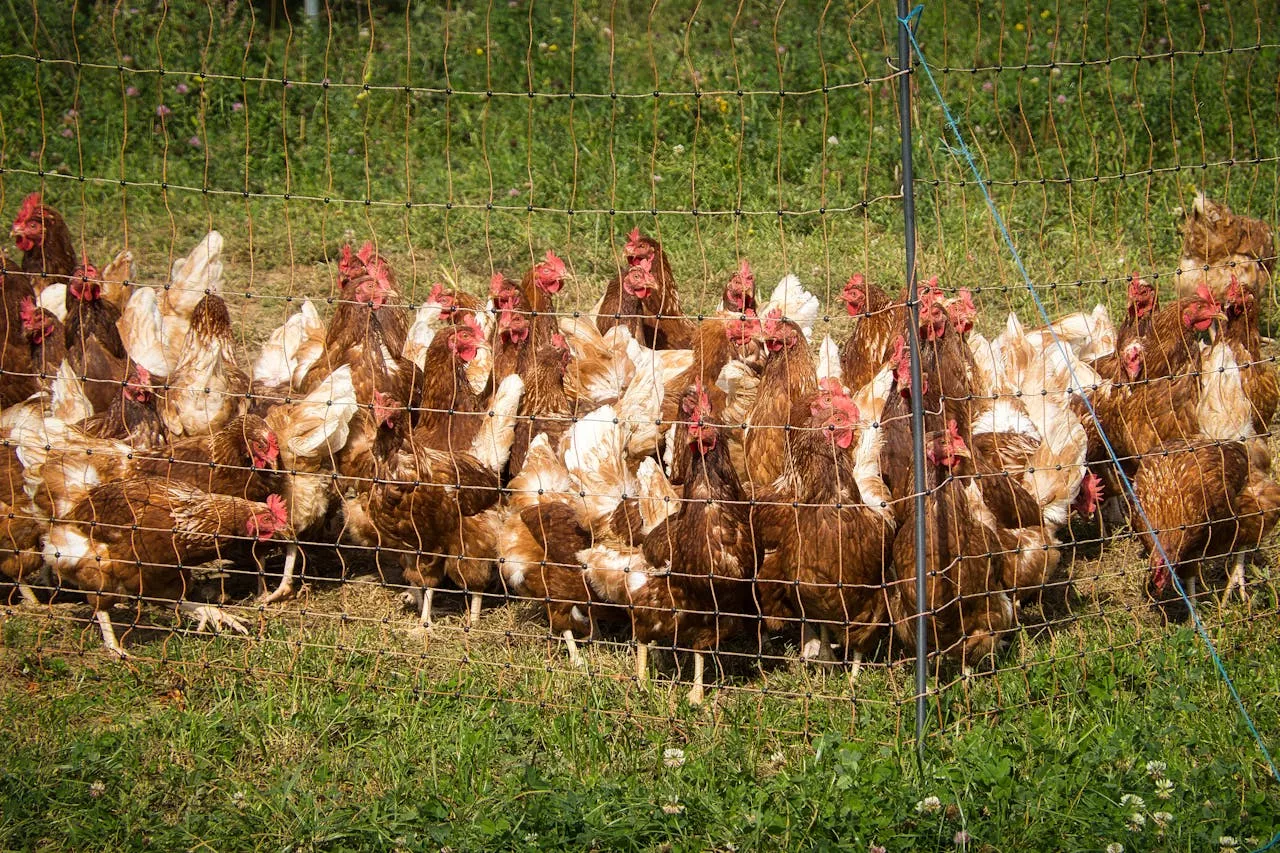
Vital Farms reported its financial results for the first quarter ended March 29, 2026, revealing a challenging start to the year as shifting pricing trends and changing promotional activity within the outdoor access egg market weighed heavily on profitability and sales momentum. Despite continued revenue growth and expanded distribution, the company experienced a sharp decline in earnings and margins as oversupply conditions in the egg market created pricing pressure and unfavorable sales mix dynamics.
The company, a Certified B Corporation known for its ethically produced eggs and butter products, posted first-quarter net revenue of $187.2 million, representing a 15.4% increase compared with $162.2 million reported during the same period in 2025. While revenue growth remained strong, profitability metrics declined significantly as higher production costs and changing market conditions impacted financial performance.
Vital Farms reported a gross margin of 28.3% during the quarter, down substantially from 38.5% in the prior-year period. The company also recorded a net loss of $1.5 million, compared with net income of $16.9 million a year earlier. Diluted loss per share came in at $0.03, reversing from diluted earnings per share of $0.37 in the first quarter of 2025.
Adjusted EBITDA also dropped sharply to $5.0 million from $27.5 million in the prior-year quarter, reflecting pressure from higher operating costs, weaker pricing dynamics, and increased spending to support the business.
Russell Diez-Canseco, Executive Chairperson, President and Chief Executive Officer of Vital Farms, acknowledged that the company’s first-quarter results did not meet internal expectations. He explained that changes in industry pricing and intensified promotional activity across the outdoor access egg category had a far greater impact on sales velocity than the company had anticipated.
According to Diez-Canseco, Vital Farms is moving quickly to regain momentum by narrowing price gaps between its products and competing outdoor access egg offerings. The company believes this strategy will help improve consumer demand and accelerate sales volumes in the coming quarters.
At the same time, Vital Farms is implementing measures to streamline its cost structure and reduce capital expenditures during 2026 in order to better align operations with current market realities. Company leadership emphasized that these actions represent a reset for the year rather than a change in the company’s long-term ambitions or growth strategy.
Despite near-term headwinds, Diez-Canseco stated that the core fundamentals of the business remain strong, highlighting distribution gains already secured for the year as evidence of continued retailer confidence in the brand.
In addition to addressing pricing and operational challenges, Vital Farms announced a major strategic decision regarding its product portfolio. Following a comprehensive internal review, the company confirmed plans to wind down its butter business.
Management cited increased complexity within the international butter supply chain and more volatile economics as key reasons for exiting the category. The company believes discontinuing butter operations will allow it to focus resources and investments on its core egg business, where it sees stronger competitive advantages and more attractive long-term growth opportunities.
During the quarter, revenue growth was largely driven by increased sales volume. Volume-related growth contributed approximately $34.7 million in additional revenue, supported by expanding demand for existing products, broader item offerings, and increased distribution across retail partners.
However, those gains were partially offset by a $9.7 million decline related to price and product mix. Vital Farms explained that oversupply conditions in the egg market resulted in increased sales into breaker and wholesale channels, where products are sold at lower prices compared to traditional retail channels.
This shift toward lower-margin channels significantly impacted profitability. Gross profit for the quarter totaled $53.0 million, down from $62.5 million in the prior-year period. The company estimated that unfavorable sales mix associated with excess egg inventory reduced gross profit by approximately $4.9 million.
Higher input and production costs also contributed to margin pressure. Expenses tied to feed, labor, logistics, and operations continued to rise during the quarter, while the company simultaneously maintained investments aimed at supporting future growth.
Loss from operations reached $2.3 million during the first quarter, compared to operating income of $21.8 million in the same period last year. The decline reflected a combination of elevated costs, weaker margins, and higher selling, general, and administrative expenses.
Vital Farms noted that SG&A expenses increased as the company continued investing in infrastructure, personnel, and capabilities designed to support long-term expansion. However, these investments were not enough to offset the negative effects of pricing pressure and unfavorable product mix during the quarter.
Adjusted EBITDA margin declined to 2.7% of net revenue, compared with 16.9% a year earlier, underscoring the extent of profitability deterioration during the period.
The company’s balance sheet also reflected substantial investments and shareholder return initiatives during the quarter. As of March 29, 2026, Vital Farms held $51.4 million in cash, cash equivalents, and marketable securities and remained debt-free.
Cash balances declined sequentially by approximately $61.9 million, primarily due to investments in the company’s new egg washing and packing facility known as Vital Crossroads (VXR), located in Seymour, Indiana. Additional spending related to the development of accelerator farms and stock repurchase activity also contributed to lower cash reserves.
Net cash used in operating activities totaled $18.6 million during the quarter, compared with net cash provided by operating activities of $5.3 million during the prior-year period.
Capital expenditures increased sharply to $20.8 million, compared with just $3.1 million during the first quarter of 2025. The majority of this increase was tied to ongoing investments in the VXR facility, which represents a key component of the company’s long-term production and distribution strategy.
Vital Farms also continued executing its previously announced share repurchase program. During the quarter, the company repurchased 1,001,747 shares of common stock at an average price of $19.97 per share, representing a total investment of approximately $20 million.
Following those repurchases, the company still had approximately $80 million remaining under its authorized stock buyback program as of March 29, 2026.
Looking ahead, Vital Farms is expected to focus on restoring sales momentum within its egg business while carefully managing costs and capital investments amid ongoing volatility in the broader egg market. Management remains optimistic that strengthened distribution, operational adjustments, and renewed focus on core categories will position the company for improved performance over the longer term.
Source Link:https://www.businesswire.com/