
Today, Carbon Direct unveiled Sustainable Agricultural Biomass Sourcing for CDR: A Buyer’s Guide, a comprehensive new framework designed to help companies responsibly source agricultural residues for carbon dioxide removal (CDR) projects. Developed with input from scientists, industry leaders, and major carbon removal buyers including Microsoft and Stripe, the guide represents one of the first globally applicable approaches focused specifically on sustainable agricultural biomass sourcing for the growing CDR market.
The release comes at a pivotal moment for the carbon removal industry. Biomass-based carbon dioxide removal pathways have expanded rapidly in recent years and accounted for more than 95% of all contracted high-durability CDR transactions in 2025. As corporations and climate-focused organizations commit to removing millions of tonnes of carbon dioxide from the atmosphere, scrutiny around feedstock sourcing has intensified. Buyers, developers, and policymakers are increasingly recognizing that the sustainability of biomass sourcing is essential to ensuring carbon removal projects deliver genuine climate benefits without creating unintended environmental or social harm.
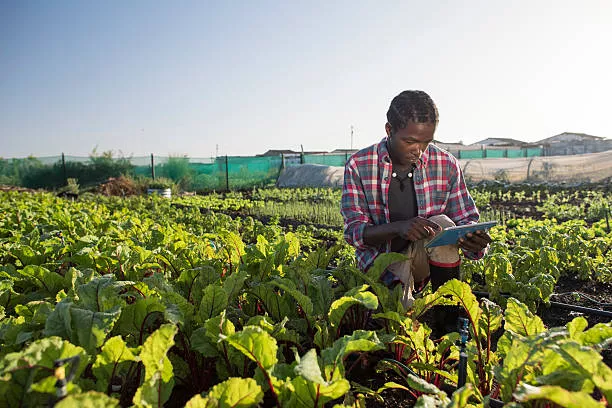
Agricultural residues such as corn stover, rice husks, wheat straw, and other crop by-products are often viewed as promising feedstocks because they originate from existing agricultural systems rather than requiring dedicated energy crops. However, these materials already serve important ecological and economic functions in many regions around the world. Farmers frequently use residues to protect soil quality, maintain soil carbon levels, provide livestock bedding, or generate additional income. Removing excessive quantities without proper safeguards could degrade soil health, disrupt local economies, and negatively affect communities dependent on these resources.
Carbon Direct’s new guide aims to address these concerns by providing a structured framework that buyers and project developers can use during due diligence reviews and while negotiating offtake agreements. The organization says the framework is intended to fill a major market gap while broader certification standards and international governance mechanisms for biomass sourcing continue to evolve.
Unlike highly localized guidance documents, the Buyer’s Guide was designed for application across a wide range of global geographies and agricultural systems. The framework acknowledges that countries and regions differ significantly in governance quality, land tenure structures, corruption risk, monitoring infrastructure, and data transparency. Because of these variations, the guide emphasizes adaptable but rigorous standards that can be implemented under different regulatory and operational conditions.
According to Dr. Bodie Cabiyo, Director of Interdisciplinary Science at Carbon Direct, the stakes surrounding agricultural biomass sourcing extend far beyond carbon accounting alone.
Cabiyo explained that agricultural residues sit at the intersection of food production systems, land ownership dynamics, rural livelihoods, and environmental stewardship. Poor sourcing decisions, he noted, not only threaten the credibility of carbon credits generated through CDR projects, but can also create meaningful ecological degradation and social harm for local communities.

The guide is intended to provide developers with greater confidence that sourcing decisions made today will remain defensible over the long term while also giving buyers clearer standards to incorporate directly into procurement contracts and project agreements.
Leaders from major CDR buyers echoed the importance of establishing rigorous sourcing practices early in the industry’s development. Phillip Goodman, Director of Carbon Removal Portfolio at Microsoft, emphasized that credible science and transparent standards are essential for building trust in the carbon removal market. Goodman said the framework establishes a strong benchmark for sustainable agricultural residue sourcing and helps create the infrastructure necessary for meaningful climate impact as the sector scales.
Similarly, Dr. Zeke Hausfather, Climate Research Lead at Stripe, described responsible biomass sourcing as a foundational requirement for scaling CDR projects credibly. He noted that while scientific understanding and market practices will continue to evolve, the new guide provides buyers and developers with a practical starting point at a critical stage of industry growth.
The framework itself is organized around four central principles intended to define responsible biomass sourcing practices.
The first principle is traceability. Under the guide, biomass feedstocks must be traceable back to their origin through verifiable chain-of-custody systems. Carbon Direct outlines three separate chain-of-custody approaches tailored to varying levels of supply chain complexity. These mechanisms are intended to ensure that biomass volumes can be tracked and reconciled throughout transportation, processing, and utilization stages, reducing the risk of misreporting or unsustainable sourcing practices entering the supply chain.
The second principle focuses on community and worker protection. The guide states that biomass should only be sourced from regions and operations with low risk of negative impacts on local communities, workers, Indigenous Peoples, and other vulnerable groups. This includes evaluating labor conditions, land rights issues, and broader community impacts associated with biomass collection and transportation activities.
The third principle addresses soil and environmental protection. Agricultural residues play a critical role in maintaining soil health, nutrient cycling, and long-term agricultural productivity. The framework therefore emphasizes sourcing methods that minimize negative effects on soil quality, soil carbon stocks, and ecosystem integrity. It also discourages sourcing practices that could threaten protected areas or lead to environmental degradation.
The fourth principle centers on market integrity. Carbon Direct argues that biomass sourcing should avoid creating distortions in agricultural or forestry product markets. Excessive demand for agricultural residues could potentially drive price volatility, incentivize unsustainable harvesting, or create competition with existing local uses. The framework encourages buyers and developers to carefully assess these broader market dynamics before scaling procurement activities.
Carbon Direct also described the Buyer’s Guide as a “living resource” that will continue evolving alongside scientific advances, market developments, and policy changes. The organization plans to refine future editions as new research emerges and as monitoring technologies and sustainability standards mature.
The new publication builds on Carbon Direct’s earlier forest biomass sourcing guidance released in 2024 and 2025, as well as five editions of the High-Quality Carbon Dioxide Removal guidelines developed jointly with Microsoft. Together, these efforts reflect growing momentum within the carbon removal industry to establish clearer standards and accountability mechanisms as investment and demand accelerate globally.
As corporations pursue increasingly ambitious net-zero and carbon-negative commitments, frameworks like this may play a crucial role in determining whether biomass-based carbon removal can scale responsibly. By emphasizing traceability, environmental stewardship, community protection, and market transparency, Carbon Direct and its collaborators are attempting to create a stronger foundation for long-term confidence in the rapidly expanding CDR marketplace.
Source Link:https://www.businesswire.com/