Topcon Agriculture has published a comprehensive report examining the current state of precision agriculture adoption in Brazil, emphasizing both the challenges slowing technology uptake and the significant opportunities available to accelerate digital transformation across the country’s farming sector. Titled “From Barriers to Progress: Accelerating the Adoption of Technology by Brazilian Farmers,” the report brings together insights from agricultural researchers, producers, and industry experts to demonstrate how modern farming technologies can help Brazil increase agricultural productivity while improving profitability and environmental sustainability.
As one of the world’s largest agricultural producers and exporters, Brazil occupies a strategic position in global food production. The report argues that expanding the use of precision agriculture technologies will be essential for helping the country meet growing international food demand while addressing increasing pressures related to resource efficiency, labor availability, climate resilience, and environmental stewardship.
Brazil has long been recognized as one of the most influential agricultural economies in the world. The country is among the leading producers of soybeans, corn, sugarcane, coffee, cotton, beef, poultry, and numerous other agricultural commodities that supply both domestic and international markets.
With the world’s population continuing to grow, demand for food is expected to increase substantially over the coming decades. Brazil is widely regarded as one of the few countries with the natural resources, agricultural expertise, and production capacity needed to help satisfy this rising demand.
According to the report, Brazil’s agricultural importance extends far beyond its own borders. Efficient and sustainable farming practices in the country directly influence global food security, international trade, economic development, and environmental conservation.
Bruno Lucio, Director of Topcon Agriculture for Latin America, emphasized that Brazil’s agricultural sector carries global significance.
He noted that Brazilian agriculture is not only critical for the country’s economy but also plays an essential role in supporting worldwide food security, economic stability, and sustainable agricultural development.
The report explains that precision agriculture technologies have evolved significantly over the past decade.
Initially, technologies such as GPS guidance, automated steering systems, field mapping, and variable-rate application equipment were primarily adopted by large commercial farming operations due to their relatively high costs and technical complexity.
However, technological advancements and declining equipment costs have made these solutions increasingly accessible to farms of all sizes.
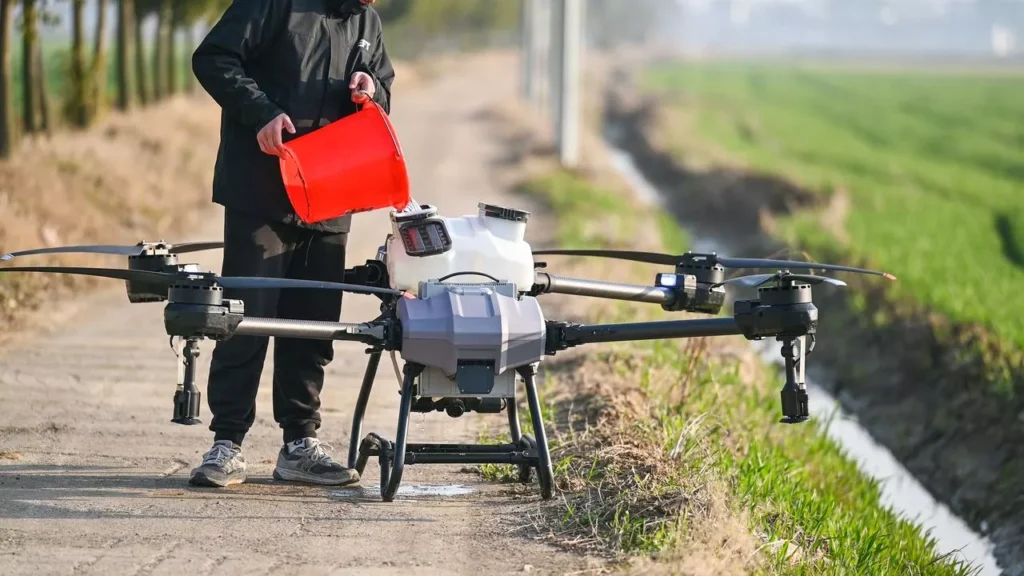
Today, precision agriculture tools are being used across a broad spectrum of agricultural enterprises, including:
Lower-cost guidance systems, improved software platforms, cloud connectivity, and user-friendly interfaces have reduced barriers for small and medium-sized producers looking to modernize their operations.
According to Topcon Agriculture, modern precision technologies now offer practical solutions that help farmers improve operational efficiency without requiring the substantial investments that were once necessary.
One of the report’s central themes is that precision agriculture enables producers to optimize resource use while maintaining or increasing production levels.
Rather than applying identical amounts of seed, fertilizer, pesticides, and irrigation across entire fields, precision farming technologies allow producers to manage variability within individual fields.
Using GPS positioning, sensors, satellite imagery, data analytics, and automated machinery, farmers can make more informed decisions based on actual field conditions.
This targeted approach delivers several important benefits, including:
The report highlights that technologies such as autosteering systems and variable-rate application equipment have the potential to save millions of working hours while reducing thousands of liters of fuel and significant quantities of agricultural inputs.
By improving operational accuracy, producers can minimize overlap during field operations, reduce unnecessary machinery passes, and optimize every hectare under cultivation.
Despite the clear advantages offered by precision agriculture, the report acknowledges that adoption across Brazil remains uneven.
Many producers continue to face practical, financial, and institutional barriers that limit investment in advanced technologies.
Among the major obstacles identified are:
Although technology costs have declined, purchasing precision equipment still represents a considerable investment for many producers, particularly small and medium-sized farms.
Limited access to affordable financing often delays technology adoption.
Reliable internet access remains inconsistent across many agricultural regions in Brazil.
Since many digital farming tools rely on cloud-based data management, software updates, remote support, and real-time information exchange, poor connectivity limits their effectiveness.
Successful implementation requires more than purchasing equipment.
Farmers must understand how to interpret data, integrate software systems, calibrate machinery, and apply information effectively to day-to-day farm management.
Without sufficient training and technical support, producers may struggle to realize the full value of precision technologies.
Many farms operate machinery from multiple manufacturers, creating interoperability challenges between equipment, sensors, software platforms, and farm management systems.
Improving compatibility across technologies remains an important objective for the industry.
Government policies, financing programs, and infrastructure investments all influence technology adoption.
The report notes that stronger coordination between public and private sectors could significantly accelerate digital transformation across Brazilian agriculture.
Topcon Agriculture emphasizes that expanding precision agriculture requires cooperation among numerous stakeholders.
The report encourages stronger partnerships involving:
According to Bruno Lucio, wider adoption depends not only on technological innovation but also on creating supportive ecosystems that improve financing opportunities, expand rural digital infrastructure, strengthen farmer education, and provide ongoing technical assistance.
Such collaborative efforts can help producers overcome barriers while ensuring that technology investments deliver measurable returns.
The report includes perspectives from several leading agricultural experts, including researchers from the Brazilian Agricultural Research Corporation (Embrapa).
Vitor H. V. Mondo, Innovation Ecosystems Supervisor at Embrapa, explains that technologies designed to simplify farm management, improve interoperability, provide clear economic returns, and support better decision-making are likely to drive broader adoption across Brazil’s diverse agricultural systems.
His comments reinforce the report’s conclusion that ease of use and demonstrated return on investment are critical factors influencing producers’ willingness to adopt new technologies.
In addition to Mondo, the report features contributions from Ricardo Inamasu, Research Scientist at Embrapa, and João Pierobon, a farmer based in São Paulo, alongside insights from other agricultural professionals and industry specialists.
Their combined expertise offers perspectives from both scientific research and practical farm management, creating a balanced assessment of current opportunities and future priorities.
Beyond improving operational efficiency, precision agriculture is increasingly viewed as an important component of sustainable farming.
By enabling producers to apply inputs more accurately, these technologies can help reduce environmental impacts while maintaining high levels of agricultural output.
Improved resource efficiency supports broader sustainability goals by reducing greenhouse gas emissions associated with fuel use, minimizing nutrient losses from fertilizers, lowering chemical application rates where appropriate, and improving soil management practices.
As global markets continue placing greater emphasis on sustainable food production, precision agriculture may also strengthen the competitiveness of Brazilian agricultural exports.
Source Link:https://www.businesswire.com/